
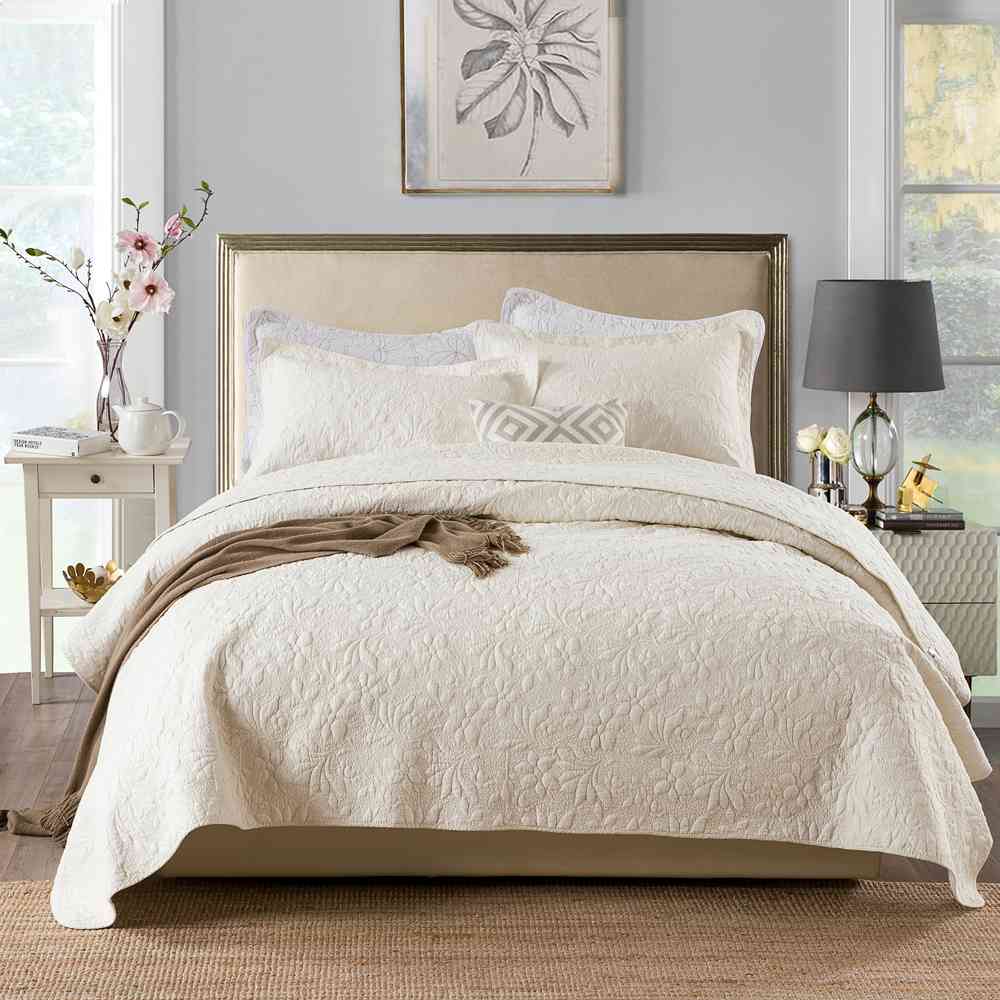
Quilt Samples: Map Motifs Across the Set
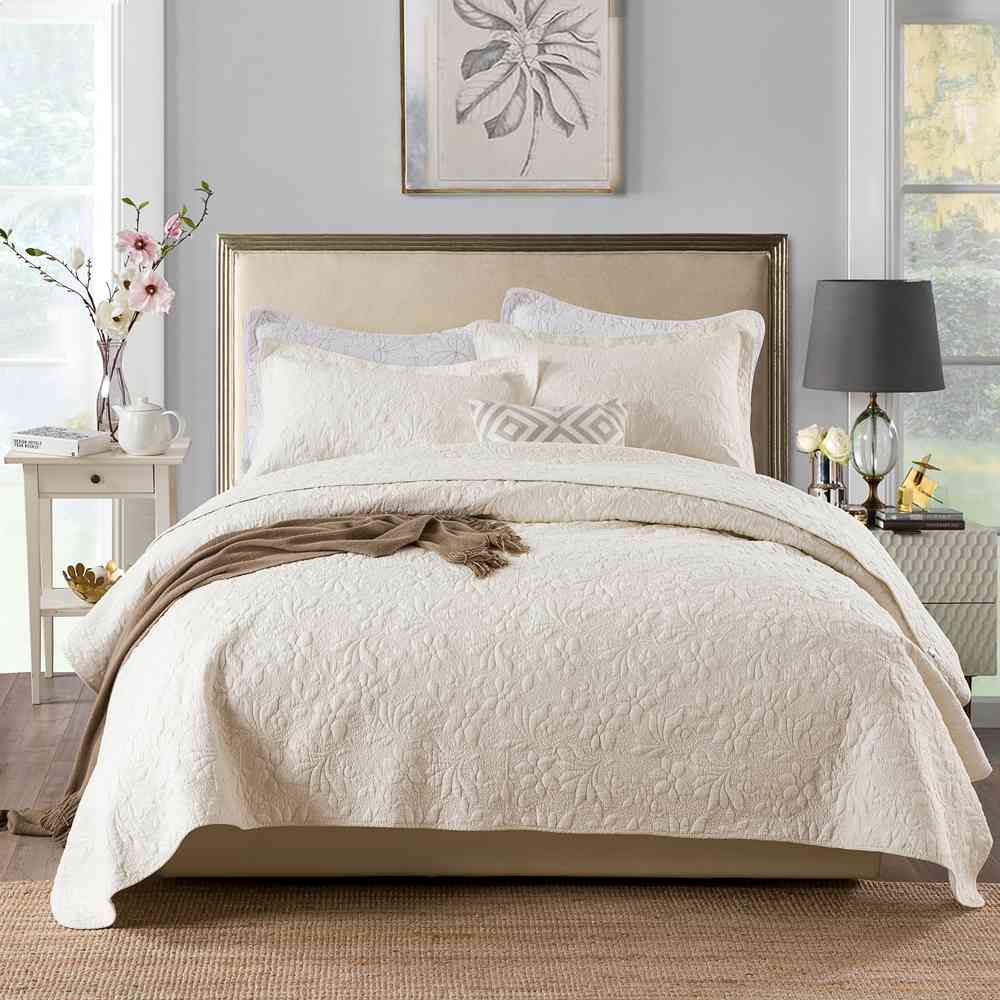
Approve a patterned quilt set by mapping motif direction and placement on each selected piece. Identify the top edge, record how the pattern meets the border and review pillowcases separately from the main covering. A styled catalogue arrangement helps communicate a visual reference, but it does not establish exact motif positioning or repeat consistency on the supplied sample.
A pattern can look coherent across a room photograph while leaving several sample decisions unclear. The main covering may be partly folded, pillowcases may face different directions and some visible pillows may be styling props. When sampling wholesale bedding sets, convert the chosen visual reference into a piece-by-piece motif record that a supplier and buyer can use without recreating the entire staged room.
Identify direction on every selected piece
Mark the intended top edge and the direction in which the motif should be viewed. Keep that reference on the main covering and on each pillowcase being considered. For a non-directional design, record that decision explicitly rather than assuming the supplier and reviewer will reach the same conclusion from the product name.
The Orchid Embroidery catalogue image shows a light floral surface across the bed. Use the chosen view as an appearance reference, then ask for the actual sample laid out so its direction and edges can be seen. The catalogue title alone does not establish the manufacturing method or the exact placement required for the order.
- Mark the top edge and motif direction.
- Review the border and corners in clear views.
- Approve pillowcases as identified components.
Separate motif placement from room styling
Record which visual relationship matters to the range: a centred feature, an even-looking spread, a chosen direction or another clearly described arrangement. Use an annotated sample image to identify the requirement. Avoid treating a fold, decorative cushion or partly hidden edge in the room scene as a complete placement specification.
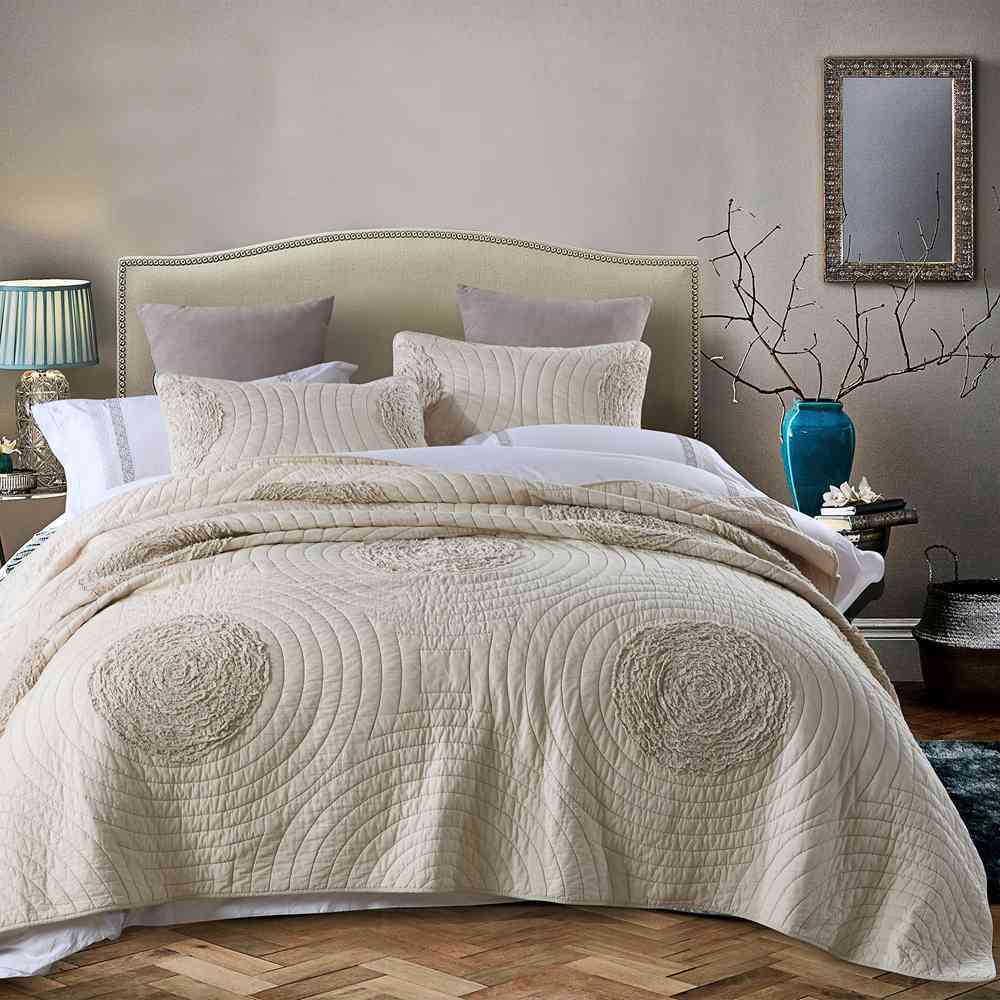
The Circular Pattern reference makes the relationship between larger circular areas and the surrounding stitched lines visible. Ask how the selected sample places those features across its actual dimensions. Do not infer a fixed repeat interval or placement tolerance from perspective in the photograph; agree the relevant criteria for the sample being reviewed.
| Visual record | Reference to mark | Question to resolve |
|---|---|---|
| Main covering | Top edge and motif direction | Which way should the design read? |
| Pattern field | Required visual placement | What arrangement is being approved? |
| Border and corner | Actual edge views | How should the motif meet the edge? |
| Pillowcase | Individual piece identity | Does its orientation match the agreed set? |
Give borders and corners their own view
Request a clear edge and corner view where the selected appearance depends on the pattern meeting a border. Keep the image tied to the sample identifier and chosen orientation. This helps distinguish a deliberate border treatment from a feature that simply disappears beneath a fold in the catalogue scene.
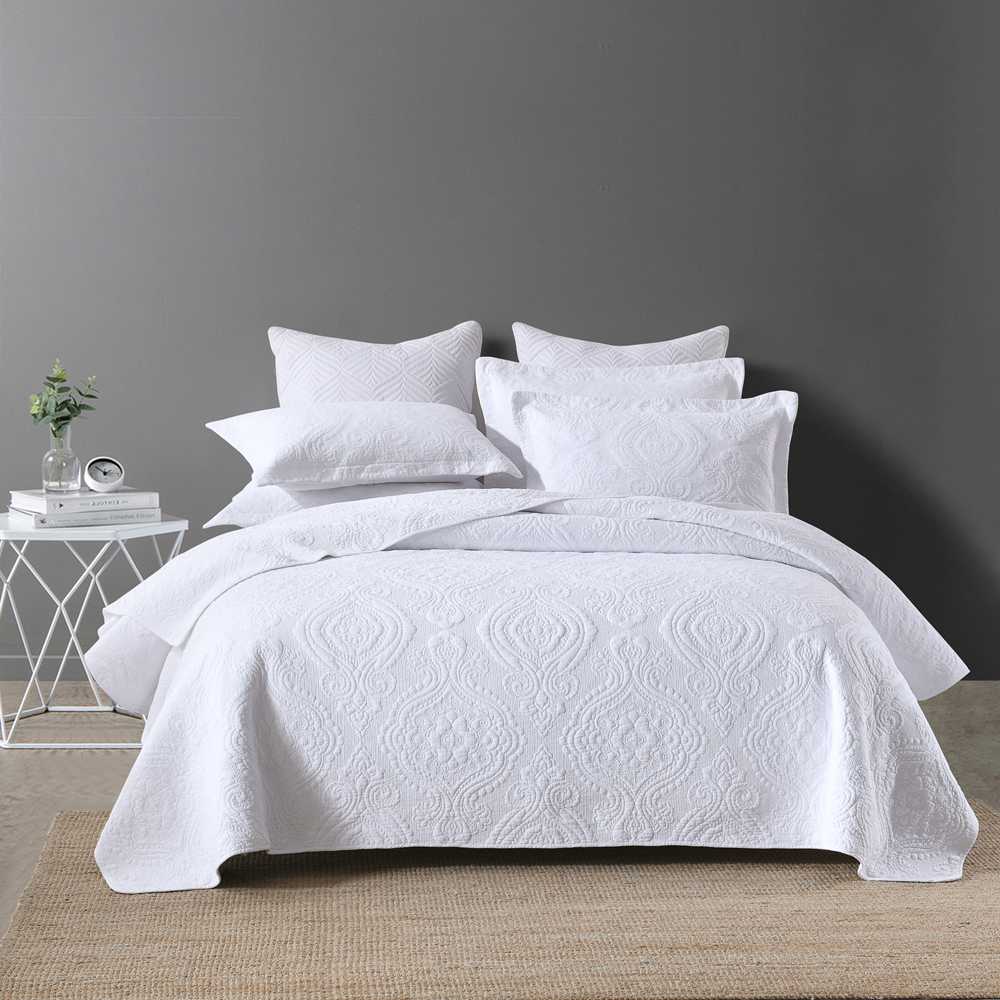
The Damascus design provides an ornamental pattern reference. Review how the actual motif approaches the selected edges instead of approving only a central area. If the requested border relationship changes between sizes, keep those decisions separate and ask for the relevant sample information before extending one visual approval to every variant.
Review the pillowcases as individual components
Identify which pillowcase reference belongs to the requested set and inspect it on its own. Record direction, visible motif and edge decisions independently of the main covering. A room image can show several layers of pillows, so first confirm which pieces are part of the supplied unit rather than assigning approval comments to an unidentified prop.
Compare the selected pieces together under the same review conditions, then retain individual views as well as a grouped photograph. Screen colour is not a physical shade approval, and similar pattern names do not prove identical material or colour across components. Keep any further material or colour confirmation visible beside the visual sample decision.
Close a specific visual revision
Give each requested correction a location, component reference and clear decision. When a revised sample arrives, compare it with the same motif map and retain the earlier comments. This allows the team to see whether the identified placement or border question was resolved rather than approving a new room photograph without tracing the change.
Store the accepted main-piece and pillowcase views with the sample revision. The resulting record addresses visual placement; it does not independently prove composition, care behaviour or durability. Keep those separate information requests connected to the same selected variant so that an accepted motif layout is not treated as approval of unrelated product claims.
Frequently Asked Questions
Can a styled bed image define exact motif placement?
Use it as a visual starting point, then record the actual sample and agreed placement criteria in clear component views.
Should pillowcases inherit approval from the main covering?
Review the identified pillowcases separately. Their direction, edges and visible motif may need their own decision.
Does the product name prove the stitching method?
No. Ask for confirmation of actual construction instead of inferring a method from a catalogue name or visual effect.
What should remain after a correction is accepted?
Keep the marked location, earlier comment, response and accepted sample revision so the visual decision can be traced.
Send the component motif map through Pinlun contact and retain the accepted sample views with the order reference. The blog archive remains a separate source for broader bedding-selection discussion.