
Quilt Fabric RFQs: Clarify Weave and Count Fields
For a quilt fabric RFQ, ask the supplier to explain each construction field for the actual component being offered. Pinli’s Orchid listing uses “Pique Cotton,” “Plain Weave” and “Thread Count: 60.” Retain those as catalogue wording, then request the intended construction description, the meaning and unit of 60, and the face or reverse each answer covers. Do not resolve the terms from a styled photograph.
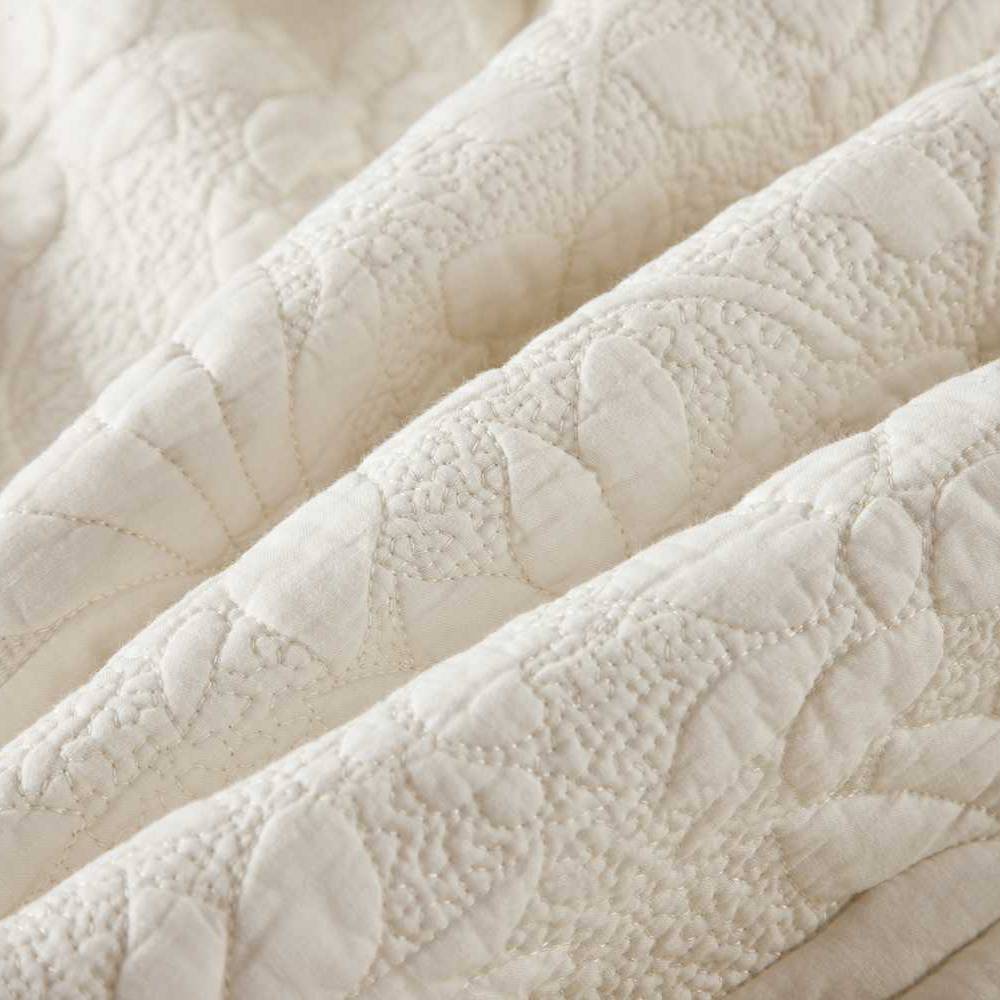
Official close surface reference from the Orchid quilt listing. Visible stitching and texture identify catalogue appearance; the photograph does not verify weave construction, fibre content or a numerical count.
Keep the three catalogue fields separate
The Orchid Embroidery quilt listing contains several fabric descriptions. It names “Pique Cotton” as the fabric type, “Plain Weave” as the weave type and “Thread Count: 60.” A buyer preparing a wholesale specification needs the supplier to explain those entries for the actual fabric in the offered version.
Copy each entry into a separate enquiry field and retain its original wording. Ask the supplier for one coherent fabric description that connects them. This avoids selecting the most familiar term and quietly dropping the others before the supplier has explained its intended meaning.
Identify the fabric component before interpreting its name
Ask which physical component each field describes. The reply should identify the main piece, its relevant face or reverse, and any pillowcase fabric included in the enquiry. If one description applies throughout the offered set, request that confirmation explicitly rather than assuming a shared construction across every piece.
Use a marked sample or component reference where it helps connect the answer to the product. Keep the fabric question distinct from whether the main piece contains filling or is intended for a separate insert. Establishing the supplied construction and explaining its outer fabric are related but different decisions.
Catalogue field
Question for the supplier
Reference to retain
Pique Cotton
What fabric description is intended?
Confirmed terminology and component
Plain Weave
Which material or layer does it describe?
Construction scope
Thread Count: 60
What is counted, with which unit and basis?
Complete numeric specification
Face and reverse
Are their specifications the same?
Separate entries where they differ
Official folded surface reference from the same listing. Ask which face, reverse or component the supplier’s fabric fields describe rather than assigning a construction from the visible texture.
Request the meaning and unit of sixty
The number 60 should remain attached to the catalogue’s field name until the supplier clarifies it. Ask what the value measures or counts, what unit applies, and how the stated value is determined. Request the complete expression the supplier uses in its technical fabric information.
Do not convert the entry into a yarn designation, a thread-density claim or a fabric weight by assumption. If a translated catalogue label is incomplete, ask the supplier to provide the original technical term and an explanation. Keep any corrected expression with the offer so that later product wording uses the confirmed meaning.
Ask for a matching fabric reference
Request a fabric information sheet or another supplier reference that identifies the material offered for this item. Ask it to connect the construction description and numeric fields to a fabric code, sample or other useful identifier. Where the record uses a different name from the website, request the correspondence in writing.
A surface photograph can help identify which side is being discussed, but it should not be used to settle the weave or count question. Keep the supplier’s written description and its supporting reference together, allowing a buyer to follow the explanation without interpreting the stitching pattern as a material test.
Official Orchid styled-bed reference. Room props and the displayed arrangement do not define the fabric specification or confirm supplied components.
Separate fabric construction from decoration
The Orchid product name and other fields also refer to decoration and manufacturing operations. Those entries raise their own questions about the finished appearance. In this enquiry, ask the supplier to distinguish the underlying fabric description from any operation applied to it.
This distinction helps a purchasing team avoid using one answer for two different specifications. A response identifying a print or a quilted pattern does not by itself explain the base fabric’s construction field. Conversely, a fabric description should not be expanded into a claim about the decoration process shown on the finished product.
Use the confirmed terms in the quotation annex
After the supplier responds, place the confirmed construction name, component scope and complete count expression together in the quotation annex. Retain any relevant fabric or sample identifier beside them. If a field is still unresolved, identify that specific gap rather than replacing it with a typical specification from another bedding product.
Preserve the original catalogue entry for traceability.
Add the supplier’s confirmed technical wording.
State the unit and basis of any numerical entry.
Keep component differences visible in separate rows.
For a proposed alternative fabric, request the same fields independently. Compare actual specifications instead of accepting a similar room photograph as evidence that the fabric construction is unchanged.
Send a precise fabric clarification request
Ask: “Please explain the Pique Cotton, Plain Weave and Thread Count 60 entries for the offered Orchid version, including the component scope and complete count expression.” Send the request through the supplier contact page. Keep the reply attached to the current quotation, with the bedding articles available as broader purchasing context.
Frequently asked questions
Should the buyer choose one fabric label from the page?
Retain the labels and ask the supplier to explain how they describe the actual offered fabric. Do not silently discard an unresolved entry.
Does sixty establish a complete count specification?
Request what is counted, the applicable unit and the determination basis before using the number as a technical specification.
Can the surface image confirm the weave?
Use it as a catalogue appearance reference. Obtain the supplier’s component-specific construction description and supporting fabric reference.
Bedding specificationsFabric constructionCount terminology